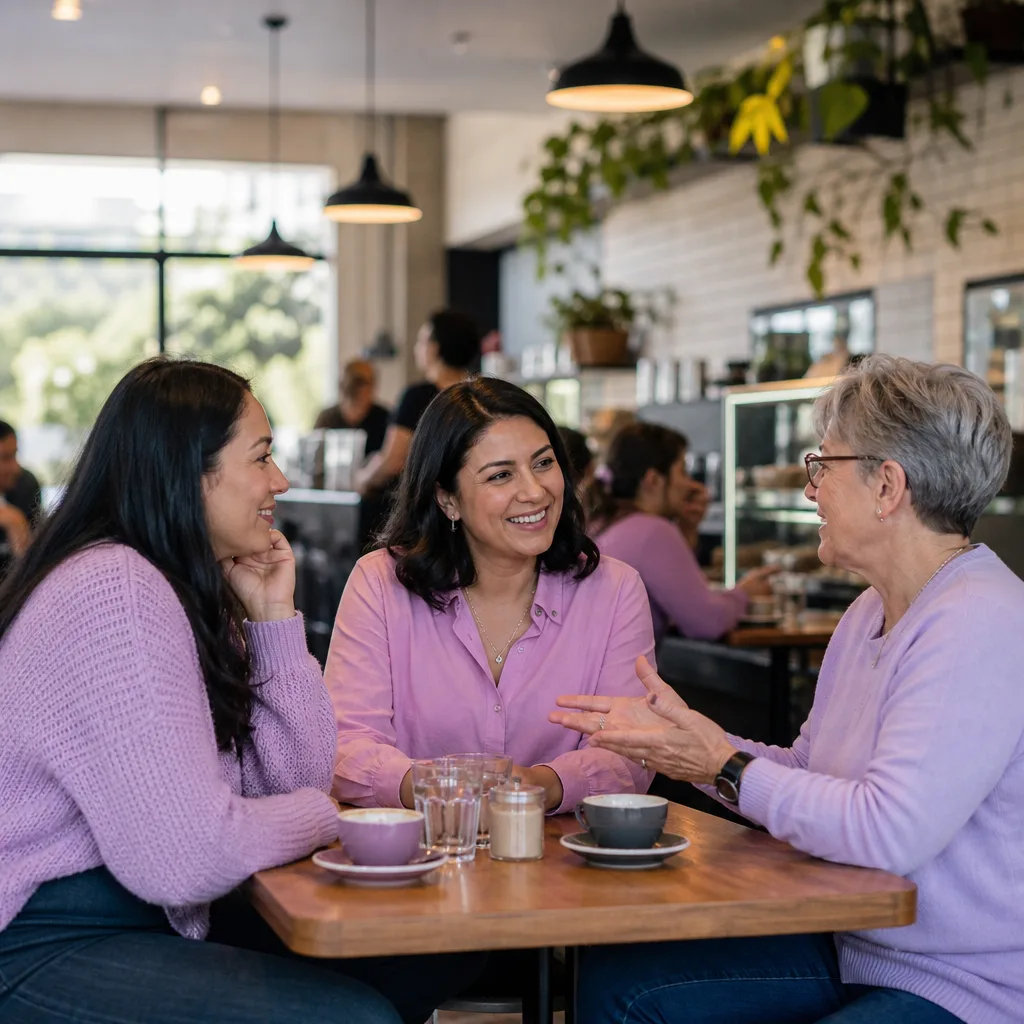
Clear, respectful advice for dating across Sydney’s cultures, communities and family traditions.
You meet for coffee in Parramatta. The conversation is easy, the second date is already being discussed, then one question changes the temperature: What does your family think about you dating? To one person, it is ordinary curiosity. To the other, it feels like an interview conducted three months too early.
That small collision says a great deal about multicultural dating in Sydney. People can live a few suburbs apart yet carry very different ideas about privacy, family approval, faith, affection, marriage and who pays for dinner. Add migration histories, mixed identities and the practical strain of crossing the city after work, and dating becomes less about learning a list of cultural rules than learning how one particular person lives.
Sydney is well suited to that work. Chinese, Indian, Lebanese, Greek, Italian and Pacific communities have long histories here, while people continue to arrive from Britain, Ireland, New Zealand and elsewhere. Many Sydney singles belong to several worlds at once. Someone may speak Arabic with their grandparents, use Australian English at work and feel only loosely connected to religion. Another person may have grown up in a secular household but want a wedding shaped by family tradition.
What does multicultural dating in Sydney actually involve?
Multicultural dating means discussing the expectations behind everyday choices rather than guessing those expectations from a person’s surname, accent, faith or appearance.
Culture is not an instruction manual. It is closer to a set of background settings: influential, sometimes powerful, but adjusted by age, family, personality, gender, migration and experience. Two siblings raised in the same home may make entirely different dating choices.
The useful question is not “What do people from your culture do?” but “What matters to you, and how does that affect a relationship?”
This guide covers the conversations that tend to matter most in cross-cultural dating Sydney wide: how involved families may be, how faith affects daily life, when relationships become public, what commitment means and how to handle misunderstandings without turning every disagreement into a cultural seminar.
- Stay curious. Ask about the individual in front of you, not an imagined spokesperson for a community.
- Be specific. “Would you want your partner at family celebrations?” is more useful than “Is family important in your culture?”
- Allow complexity. A person can value tradition while questioning parts of it, or feel culturally connected without being religious.
- Notice logistics. In Sydney, distance, shift work, family duties and share-housing can affect a relationship as much as cultural expectations do.
Culture, Family and Community Expectations
Family can appear surprisingly early in a relationship. That does not always mean parents are choosing a partner or expecting an engagement. Sometimes family is simply part of daily life: Sunday lunch, helping at a family business, caring for grandparents or driving younger siblings somewhere. If you were raised to treat dating as private, that level of involvement can feel intense. If you grew up in a close family network, keeping a partner separate for months may feel suspicious.
How involved should family be when you are dating?
Family involvement should be negotiated by the couple, with neither secrecy nor immediate access treated as the only respectable choice.
Across Sydney’s Chinese, Indian, Lebanese, Greek, Italian and Pacific communities, family bonds can be central. Yet the form varies sharply. One family may expect regular updates; another simply wants to know a relationship is serious before meeting anyone. Some parents care most about faith. Others focus on character, education, financial stability or whether a partner will participate in family life.
Expatriate families bring another pattern. Parents may be overseas, but their views can still shape decisions through frequent calls, visits and expectations about where adult children will eventually live. A British, Irish or New Zealand arrival may also seem culturally familiar while holding quite different assumptions about emotional reserve, humour, drinking, money or commitment.
Do not stage a confrontation before one exists. Ask calm, practical questions and listen to how your date describes their own wishes, not only their family’s wishes.
| Topic | What you need to understand | A useful way to ask |
|---|---|---|
| Meeting family | Whether introductions are casual or signal serious commitment | “What would meeting your family mean to you?” |
| Privacy | How much relatives are told about dating and relationships | “Who do you normally talk to about someone you’re seeing?” |
| Approval | Whether family views are advice, a preference or a firm condition | “How would you handle it if your family had concerns?” |
| Celebrations | Which religious and cultural occasions a partner might join | “Which family events matter most in your year?” |
| Care duties | Current or future responsibilities towards parents and relatives | “What family responsibilities shape your week or future plans?” |
When should you introduce someone to your family?
Make an introduction when both people understand what it signifies and feel ready for the level of attention that may follow.
There is no universal timetable. In some households, bringing someone to a barbecue is ordinary. In others, walking through the front door announces that marriage is being considered. Ask before accepting or offering an invitation. A simple explanation prevents a great deal of confusion: “My cousins will be there, but this is casual,” or “My parents will see this as a serious step.”
If one person wants an early introduction and the other does not, identify the reason. Privacy after a difficult breakup is different from embarrassment. Wanting time to establish trust is different from hiding a relationship indefinitely. The difference matters.
- Agree on language. Decide whether you will be introduced as a friend, a date, a partner or someone you are getting to know.
- Prepare lightly. Mention names, relationships, food customs and any sensitive subjects, but do not issue a ten-page briefing.
- Set a finish time. A first family gathering is easier when neither person feels trapped for an entire day.
- Debrief privately. Talk afterwards without mocking accents, food, religious practice or family dynamics.
How do you avoid stereotypes while still discussing culture?
Treat cultural background as a conversation starter, never as evidence of what a person must believe or how they will behave.
There is a lazy version of curiosity that sounds like interest but asks the other person to perform an identity. Repeated questions about where someone is “really” from, assumptions about strict parents, jokes about spicy food, or treating bilingualism as an exotic party trick can wear thin quickly.
Names for identity also vary. Some people say Chinese Australian, Lebanese Australian, Greek, Samoan, Indian, Anglo, mixed or simply Australian. Follow the terms they use. If you make a clumsy assumption, correct it without turning your apology into another task for them. “I shouldn’t have assumed that. Thanks for correcting me” is usually enough.